
THE SPIRIT OF EXCELLENCE
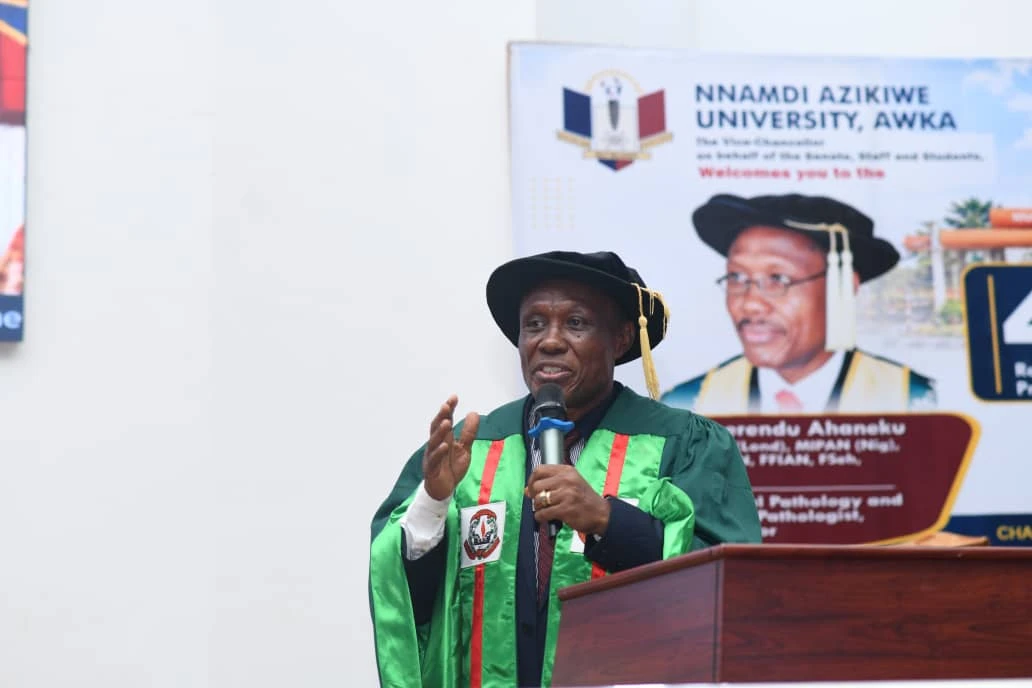
AT 4TH JUBILEE LECTURE, FORMER UNIZIK VC, PROF.JOSEPH AHANEKU SHOWCASES DECADES OF DISTINGUISHED ACADEMIC LEGACY, RESEARCH OUTPUT AND LEADERSHIP EXCELLENCE
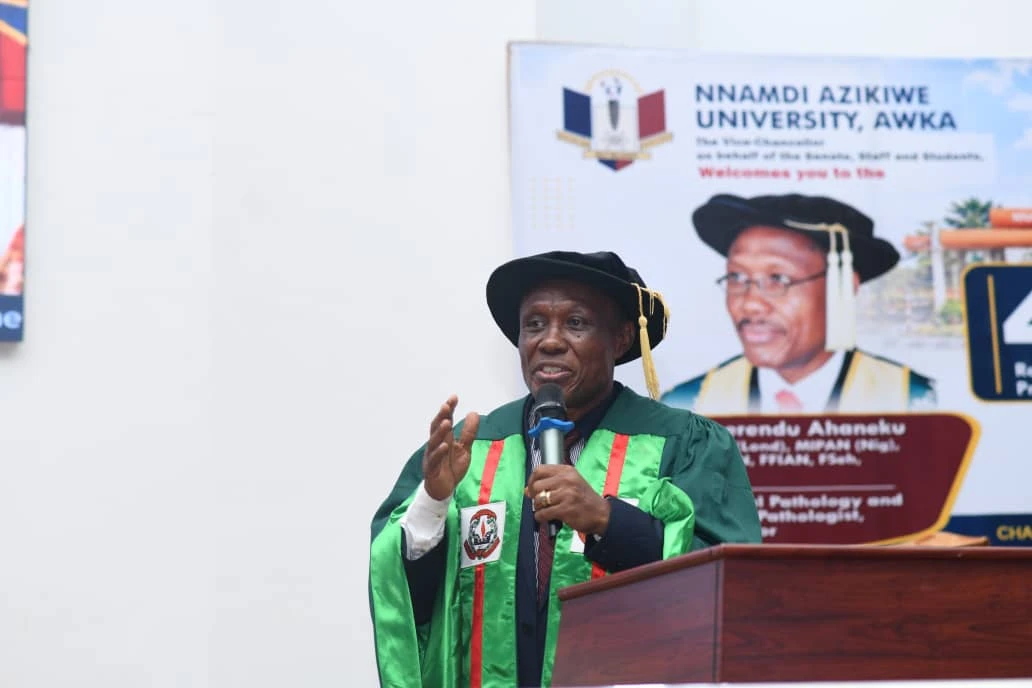
Nnamdi Azikiwe University, Awka, has celebrated the distinguished academic career and enduring contributions of Professor Joseph Eberendu Ahaneku at its 4th University Jubilee Academic Lecture, where the former Vice-Chancellor reflected on more than three decades of scientific research, academic excellence and university leadership.
The lecture, held on Thursday, November 12, 2026, at the Zephaniah Auditorium, was titled “Traversing Two Centuries and Looking Beyond Laboratory Results: A Captivating Tale of the Longest-Serving (29+) Professor in UNIZIK.”
It provided an opportunity to examine Professor Ahaneku’s remarkable journey in academia, his scientific discoveries, international research engagements and contributions to the development of the University.
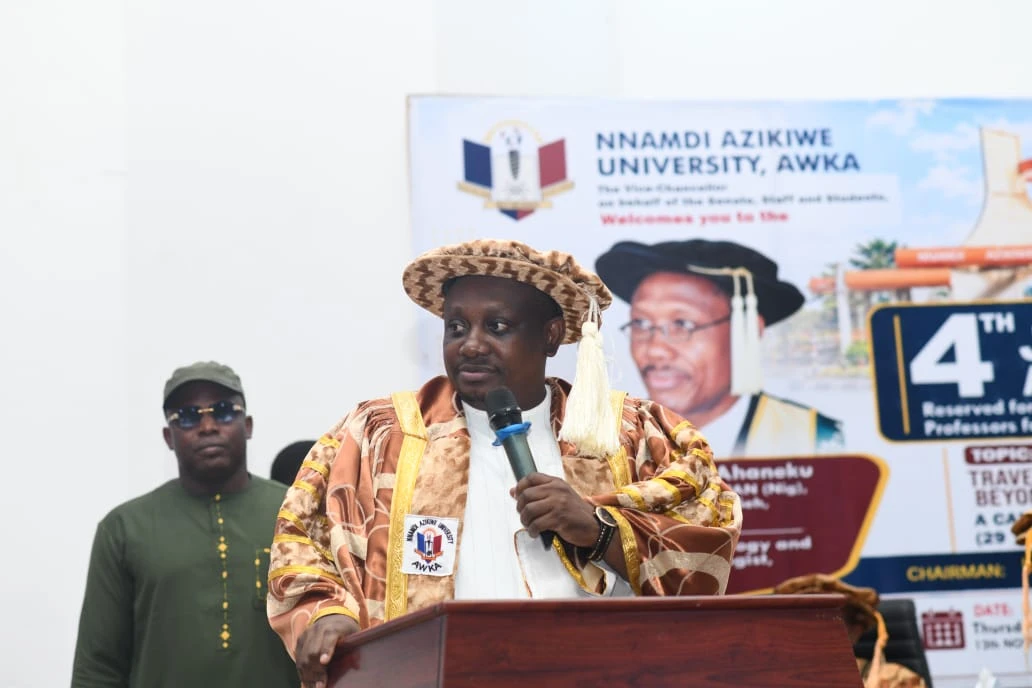
In his opening remarks, the Vice-Chancellor, Professor Ugochukwu Bond Stanley Anyaehie, welcomed members of the University community and invited guests, acknowledging the presence of the University Registrar, Dr. Chinenye Okeke; the Provost, College of Health Sciences, Professor Emejulu; members of the Governing Council; and other distinguished senior colleagues.
Congratulating Professor Ahaneku on the occasion, the Vice-Chancellor described the lecture as an opportunity for the University community to gain insights into the experiences and achievements of a scholar whose contributions extended well beyond the laboratory.
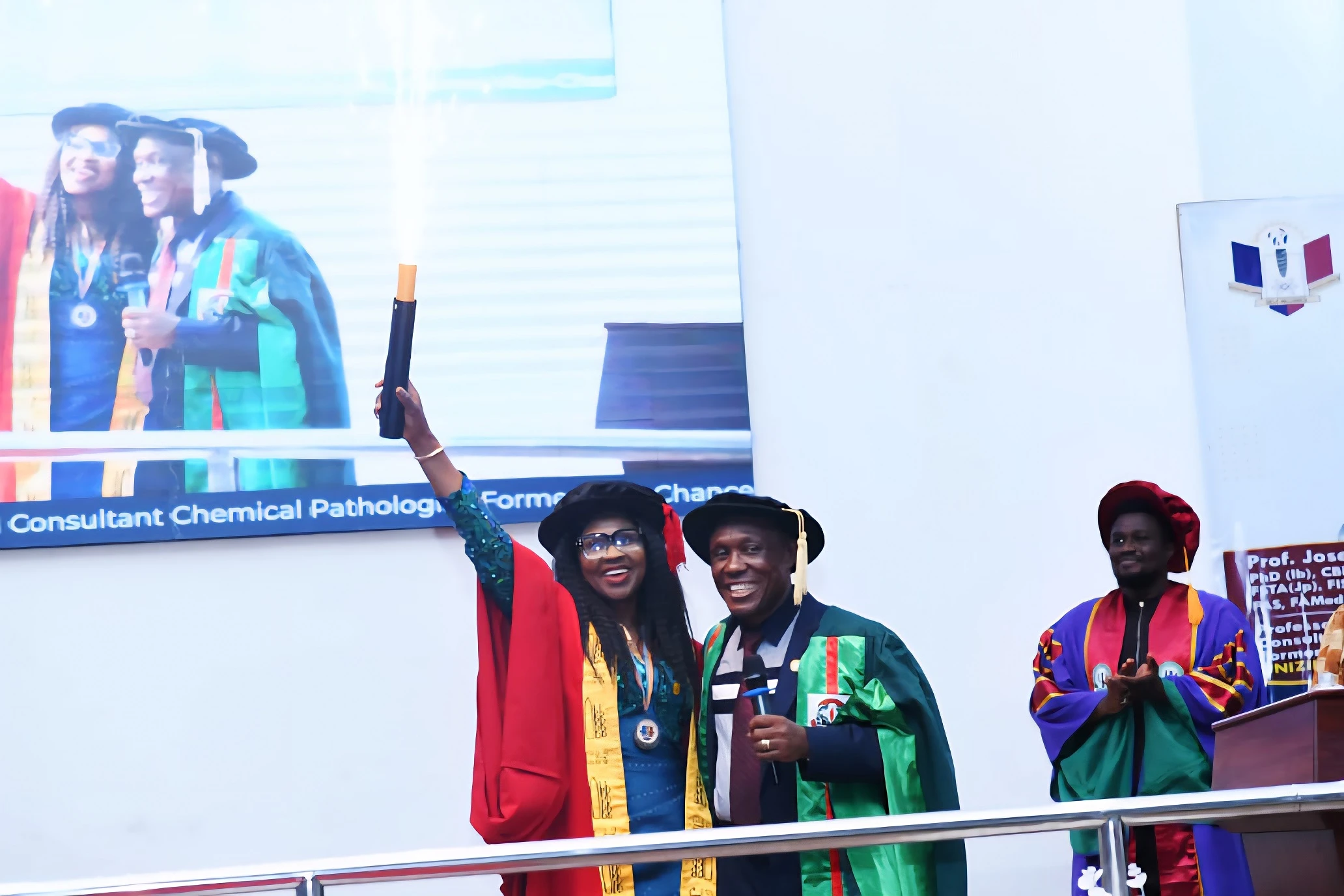
In a light-hearted reference to the lecture's theme, he remarked that Professor Ahaneku had been looking beyond the laboratory even before attaining professorial status, He expressed the
hope that the lecturer would share other interesting discoveries from his life beyond the laboratory, before inviting the audience to relax and enjoy the occasion.
Delivering the lecture, Ahaneku, a Professor of Clinical Pathology and Consultant Chemical Pathologist, traced his journey from his early life and education to his emergence among the University's longest-serving professors. Born on October 1, 1962, from Nnarabia, Ahiara, Ahiazu Mbaise, Imo State, to Chief Sir Lazarus Ihesiaba Ahaneku and Lolo Elizabeth Ahaneku, both teachers, he attributed much of his in early formation to the values of discipline, education and hard work instilled by his parents.
He recounted his educational journey through St. Mary's Primary School, Oke-Uvuru; St. Joseph's Primary School, Eke Nguru; and Mbaise Secondary School, where he completed his secondary education in 1979 with Grade One in the West African School Certificate Examination.
His academic pursuit took him to the University of Ibadan, where he obtained a Bachelor of Science degree in Biochemistry in 1984. After completing his National Youth Service Corps programme in Oyo State, he returned to the institution for postgraduate studies, earning a Master of Science degree in Chemical Pathology in 1987 with distinction as the best graduating student.
He subsequently completed his doctoral studies on March 7, 1991, with research support from the University of Ibadan Senate Research Grant and the Pfizer Pharmaceutical Foundation.
Professor Ahaneku explained that his passion for scientific inquiry developed through research projects that examined the relationship between biochemical processes and human health.
His undergraduate research investigated the effect of propylene glycol on the metabolism of acetaminophen in rats, while his postgraduate work focused extensively on lipids, lipoprotein and high-density lipoprotein (HDL) subfractions.

At the University of Ibadan's Lipid Research Laboratory, he participated in studies that deepened his understanding of lipid metabolism and its clinical significance. His research subsequently extended to liver diseases, viral hepatitis, cholestatic jaundice and other conditions, demonstrating the importance of laboratory investigations in understanding and managing diseases.
He also discussed his involvement in research supported by the Pfizer Pharmaceutical Foundation, particularly studies on the effects of antihypertensive medications, including Amlodipine and Doxazosin, on lipid and lipoprotein profiles. These investigations examined the relevance of baseline lipid values in assessing changes associated with antihypertensive treatment.
Prof. Ahaneku commitment to research earned him opportunities for international academic exposure and collaboration. In 1993, he received a Science and Technology Agency fellowship in Japan, where he undertook research at the National Institute of Health, Tokyo, and was recognised with a Researcher of the Year award.

He later undertook further research at Saga Medical School between 1995 and 1996 under the Japan Society for the Promotion of Science programme.
In 1998, he proceeded to Hamamatsu University School of Medicine for another research fellowship, where his work included investigations into antihypertensive medications and fibrinolytic profiles. Among his notable scientific contributions was research on the expression of PDCD4, also referred to as the H731 gene product, in Hela cells, published in 1997.
Turning to his career at Nnamdi Azikiwe University, Professor Ahaneku recalled joining the then Anambra State University of Technology, Nnewi Campus, in 1991 as a lecturer in Chemical Pathology. He noted that he was initially the department's only academic staff member, a responsibility that placed him at the centre of its early academic development.

His dedication to teaching and research earned him promotion to Professor of Chemical Pathology on October 1, 1997, at the age of 35.
During his early to middle research lecturing career period, Prof. Ahaneku recorded at least five globally acclaimed scientific discoveries and breakthroughs in medical sciences first in history.
He became the first Professor of Chemical Pathology at the University and one of the early professors to emerge from the Nnewi Campus.
Beyond the lecture room and laboratory, Professor Ahaneku distinguished himself through several administrative responsibilities. He served as Sub-Dean of the Postgraduate School and later as Deputy Vice-Chancellor (Academic) from 2010 to April 2014 before his appointment as the University's fifth substantive Vice-Chancellor in June 2014, a position he held until 2019. Under his administration, Nnamdi Azikiwe University historically moved from theoretical work to tangible intellectual property creation.
Reflecting on his tenure, he highlighted initiatives undertaken to strengthen the University's academic programmes, research capacity and institutional partnerships. A major initiative was the establishment of the Directorate of University Research and Industry Partnership, which provided a framework for promoting research collaboration, innovation and the translation of academic findings into practical applications.

His administration also encouraged the protection and commercialisation of research outputs through patenting and other innovation-driven initiatives. Other notable interventions included the introduction of biometric and digital verification processes for the Post-UTME exercise and the policy of offering automatic employment as Graduate Assistants to the University's best graduating students. According to him, 221 graduates benefited from the initiative during his tenure.
Prof Ahaneku further highlighted efforts to strengthen the University's international profile through academic and cultural partnerships, including the establishment of the Confucius Institute. These initiatives, he noted, formed part of broader efforts to promote institutional development, international engagement and opportunities for academic exchange.
His service to higher education also extended to national and professional platforms. He served as Chairman of the Committee of Vice-Chancellors from 2017 to 2019 and President of the Association of Vice-Chancellors from 2018 to 2019. He has also been associated with prominent scientific and professional bodies, including the Nigerian Academy of Science and the Academy of Medical Sciences, where he served as its third President.

Moving beyond a recounting of personal achievements, Professor Ahaneku used the lecture to challenge academics and researchers to make their work more responsive to society's needs. He emphasised that scientific research should go beyond laboratory findings and academic publications to produce practical solutions capable of improving healthcare, supporting innovation and advancing national development.
Prof. Ahaneku who also became the pioneer Vice-Chancellor of the National University of Science and Technology, Abuja particularly advocated stronger collaboration among medical scientists, laboratory professionals, engineers and industry practitioners to encourage the development of indigenous medical devices and technologies.
Such partnerships, he maintained, would strengthen local capacity, reduce dependence on imported solutions and position universities as active contributors to national development.

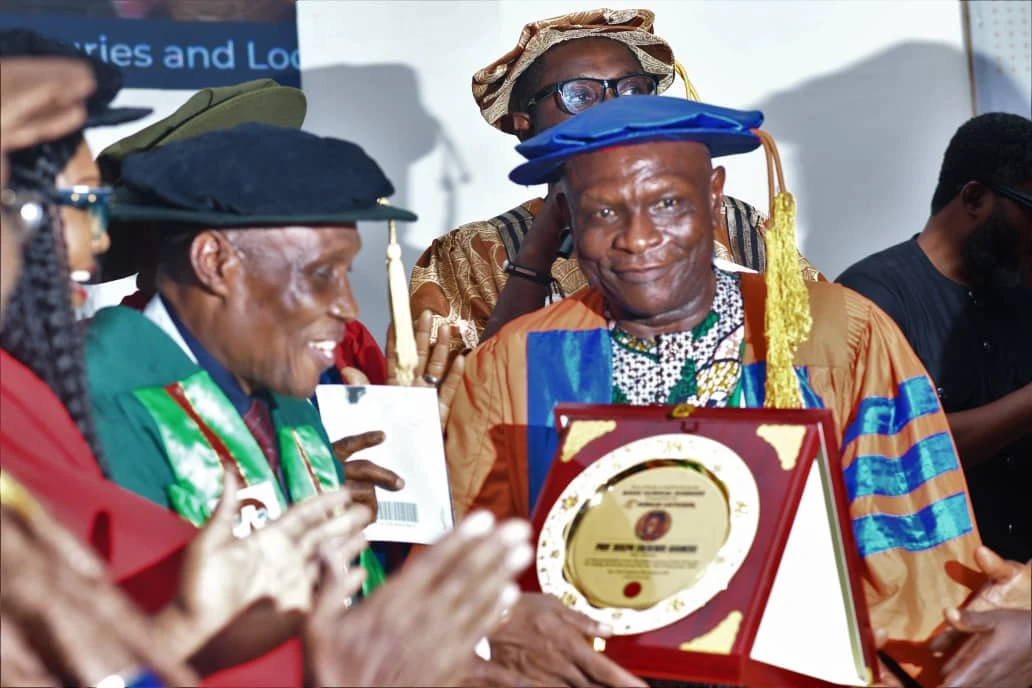
The occasion also featured the decoration of Professor Ahaneku as the Jubilarian by the Provost, College of Health Sciences, Professor Emejulu. His mentees presented an endowment award in recognition of his mentorship and contributions to their academic and professional development, while various groups also presented gifts in honour of the distinguished scholar alongside his ever supportive wife, Prof. Gladys Ahaneku.
The lecture was attended by members of the University's Governing Council, Principal Officers, Deans, Directors, Heads of Departments, Staff, Students, Traditional Rulers, Town Union Members, Family members, Friends and Professional associates of the academic Jubilarian including the former Vice Chancellor of UNIZIK, Prof. Charles Esimone and former Council Member, Senator Ben Collins Ndu.

The celebration was not only a recognition of Professor Ahaneku's longevity in the academic profession but also a tribute to a career marked by scientific inquiry, institutional service, mentorship and a sustained commitment to the advancement of knowledge.
It reinforced the University's appreciation of scholarship that extends beyond individual accomplishments to create lasting values for the institution and society.
Public Relations Unit, UNIZIK
(©2026)
← Back to News


