
Beyond Guns, UNIZIK 128th Inaugural Lecture, Prof. Nwanegbo Advocates Good Governance, Leadership Reforms for Lasting Peace and Security in Nigeria
Beyond Guns, UNIZIK 128th Inaugural Lecture, Prof. Nwanegbo Advocates Good Governance, Leadership Reforms for Lasting Peace and Security in Nigeria
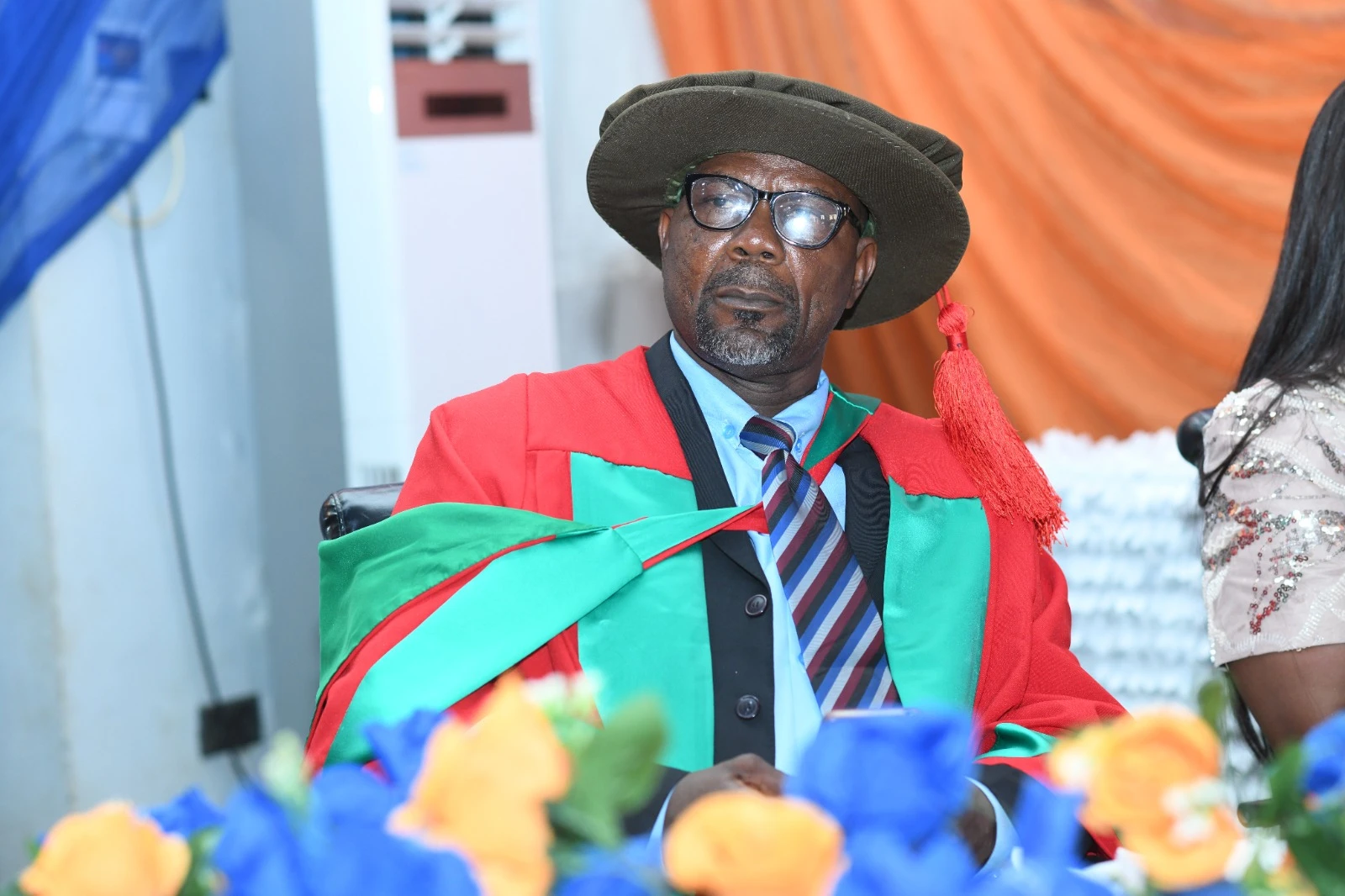
Professor of Comparative Politics, Peace and Security Governance at Nnamdi Azikiwe University, Awka, Prof. Chukwuemeka Innocent Jaja Nwanegbo, has called for fundamental reforms in Nigeria’s leadership recruitment and governance processes, stressing that good governance, rather than the use of force alone, remains the surest pathway to lasting peace and security in the country.
Prof. Nwanegbo made the call on Thursday, August 13, 2026, while delivering the 128th Inaugural Lecture of Nnamdi Azikiwe University, titled “Beyond Guns: Good Governance as Nigeria’s Pathway to Peace and Security,” at the ASUU NAU Secretariat, UNIZIK.
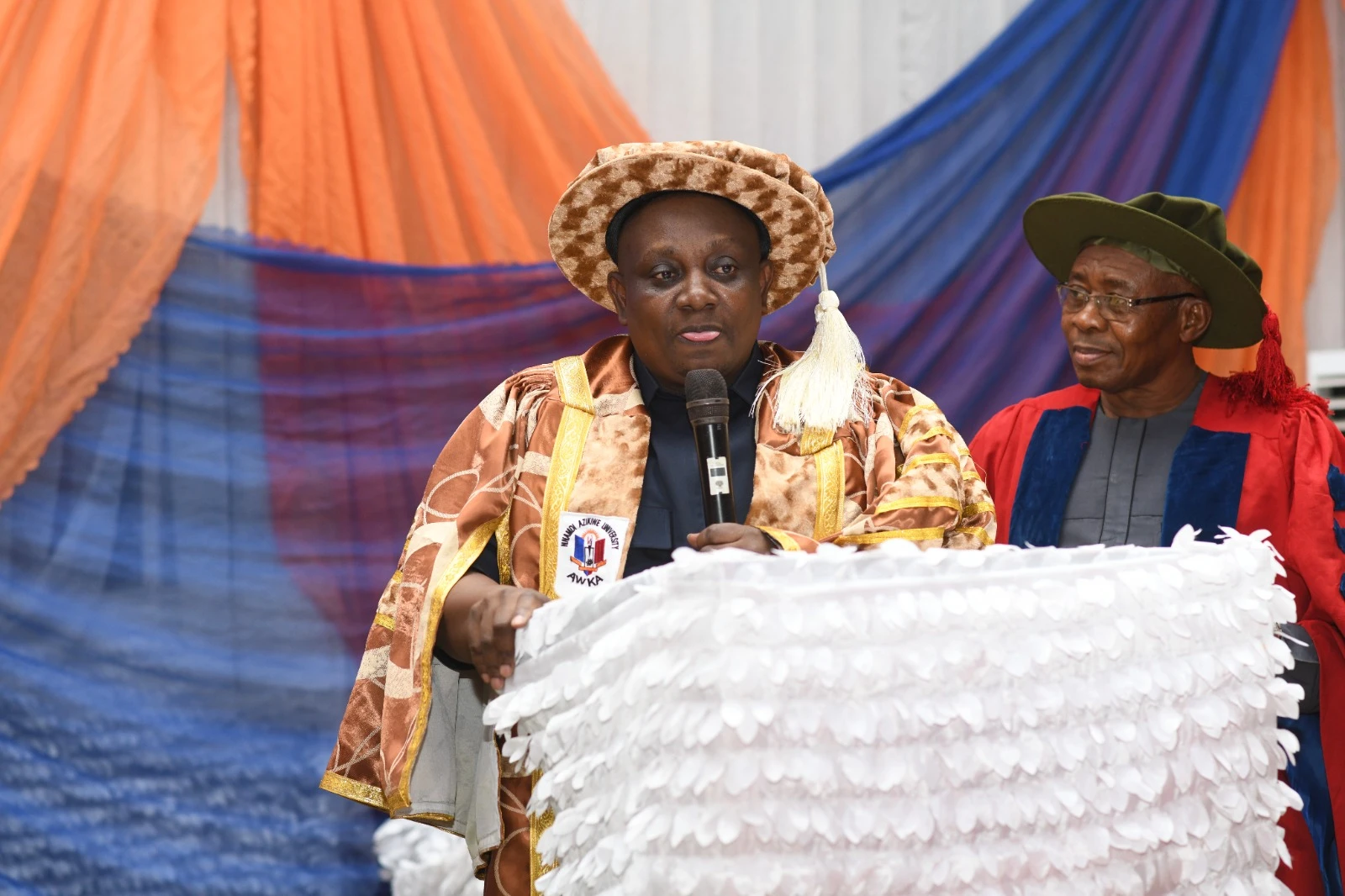
The inaugural lecturer, who is also the Director of the Institute for Peace, Security and Development Studies at Nnamdi Azikiwe University, explained that politics and governance constitute the foundation for establishing societal order, maintaining peace and ensuring security.
He defined politics as the exercise of power and authority, the making of collective decisions, the allocation of scarce resources and the practice of persuasion through acceptable means within a polity. He similarly described governance as a phenomenon that exists whenever people come together to accomplish a common purpose.

Drawing from the World Bank’s governance framework, Prof. Nwanegbo identified three key dimensions of governance: the form of political regime; the process through which authority is exercised in managing a country’s economic and social resources; and the capacity of government to formulate and implement policies and discharge its functions effectively.
He noted that peace and security are closely interconnected, stressing that a peaceful environment enhances security, while violent conflicts create fertile ground for insecurity. He identified democratic peace theory, the human security framework, institutional economics and inclusive institutions, as well as developmental state theory, among the key theoretical frameworks linking politics and governance to peace, security and development.
Presenting findings from his research on the root causes of governance failures and conflicts in Nigeria, with particular emphasis on intergroup conflicts, Prof. Nwanegbo called for the reorganisation of the country’s leadership recruitment process.
According to him, what is currently practised as electoral democracy has, in many instances, become a major source of conflict and insecurity. He therefore advocated a governance system capable of producing competent and responsible leadership that would prioritise the welfare and development of citizens.
He also called for an improvement in Nigeria’s governance matrix, arguing that better organisation of the state would reduce destructive contestations, strengthen the economy, create employment opportunities and ultimately reduce insecurity.
The professor further advocated the deliberate strengthening of Nigeria’s middle class, which he described as an important buffer for social stability. He expressed concern over the widening gap between the upper and lower classes and its implications for social cohesion.
On accountability, Prof. Nwanegbo recommended the establishment of an effective accountability framework to curb corruption, mismanagement and diversion of public resources. He also called for greater mobilisation of civil society organisations to contribute positively to improving governance and strengthening democratic institutions.

To address terrorism and banditry, the scholar advocated the identification and exposure of terror financiers and the freezing of their financial assets. He further suggested the suspension of mining licences and activities in areas affected by banditry, particularly in the North-West and North-Central regions, as a means of cutting off sources of funding for criminal groups.
He also proposed measures aimed at disrupting terrorist communications in affected areas, while calling for improved welfare and insurance coverage for security personnel who risk their lives in the service of the nation.
Prof. Nwanegbo stressed that an academic is expected to fulfil three fundamental responsibilities—teaching, research and community service—describing these as essential components of complete scholarship.
Using the Problem Tree Analogy, Prof. Nwanegbo identified the root causes of governance and generation of conflicts and insecurity in Nigeria . He itemized the establishing policies on the formation of the Nigerian state , the established policies that guide the running of the state of Nigeria and the inefficient administration of the Nigerian state that has generated poverty, pressure and different kinds of quests by the citizenry to survive.
He explicitly stated that the Nigerian state over the years has shown very weak capabilities to contain with the raging situations of violent crimes, conflicts and activities of armed groups in the country.
He listed strategies for improving governance process to contain conflicts and insecurity in Nigeria and advocated for the urgent need to reorganize the leadership recruitment process in the country as well as the need to improve on the governance matrix.
He called for an intentional rebuilding of the middle class in the country’s social strata by the state.
“What exists currently are the upper class and the lower class, where people are either very rich (without being productive) and those at the very low level struggling to make ends meet. Most of the university professors (at the current salary and opportunities) belong to this low class. Your guess can be as good as mine about where the teeming population of artisans. labourers, lower school teachers , etc belongs. Rebuilding this class entails changing the economy and making the activities in the polity to reflect production driven than what currently exists” he stated.
He concluded by advocating a “whole-of-society” approach involving government, religious leaders, traditional rulers, civil society and citizens in addressing the root causes of conflict and insecurity.

According to him, Nigeria must become a country where all citizens can willingly live and prosper, not through coercion but by convenience, justice and the provision of basic services.
He maintained that lasting peace would become achievable when Nigeria’s political leadership decides that peace is more profitable than war and commits state resources to providing basic infrastructure and opportunities for citizens to actualise their potential.
“Silencing the guns and ending insecurity requires that Nigeria should be made a home for all Nigerians to willingly live in, not by coercion but by convenience. This can only happen when all constituent units are properly governed and provided with the basic services required for human existence,
Because it is the failure of governance that created hardships, inter-group thrust deficits and contestations leading to violent conflicts and insecurity. It is by intentionally fixing our existence as Nigerians and our governance that we can resolve the crisis” he stated.
In his remarks, the Vice-Chancellor of Nnamdi Azikiwe University, Prof. Ugochukwu Bond Stanley Anyaehie, described inaugural lectures as central to university culture and an important platform for professors to showcase their research, expertise and contributions to knowledge.
The Vice-Chancellor who admitted that he is a lover of peace commended Prof. Nwanegbo for the depth and relevance of his presentation, as well as his outstanding academic achievements and contributions to the University.
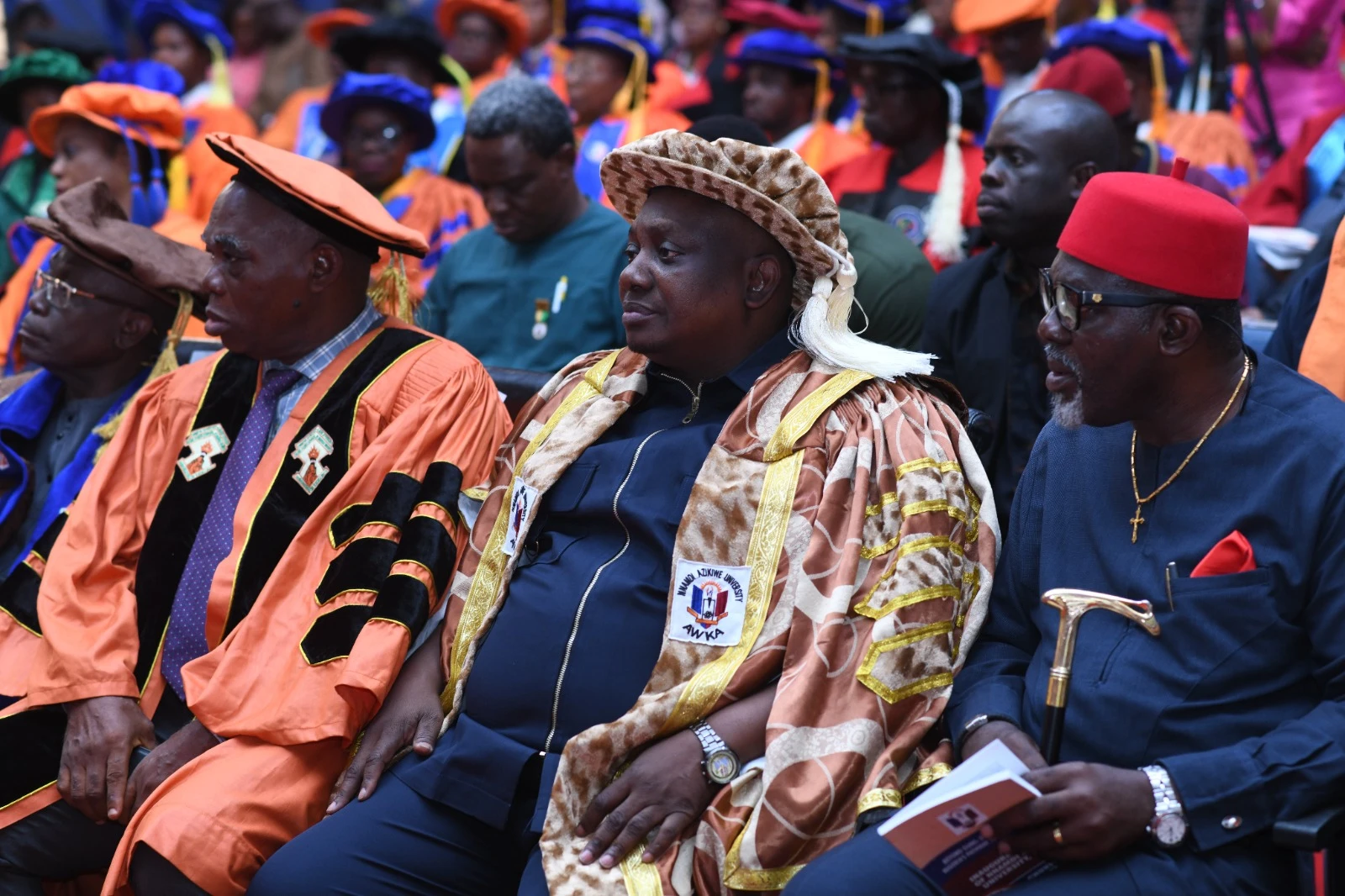
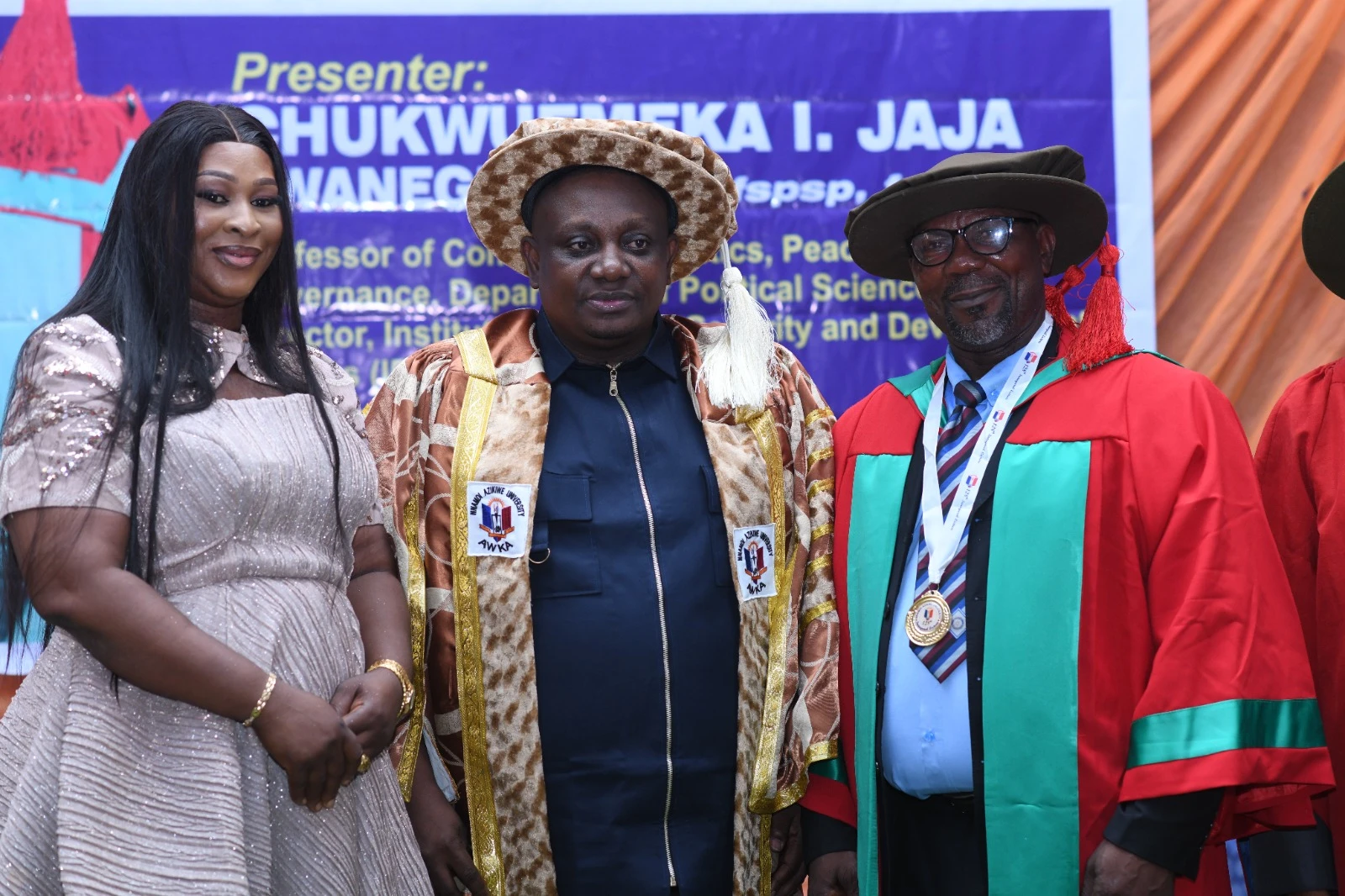
The highlight of the occasion was the conferment of the University’s Distinguished Professor Medal of Honour on Prof. Nwanegbo by the Vice-Chancellor.
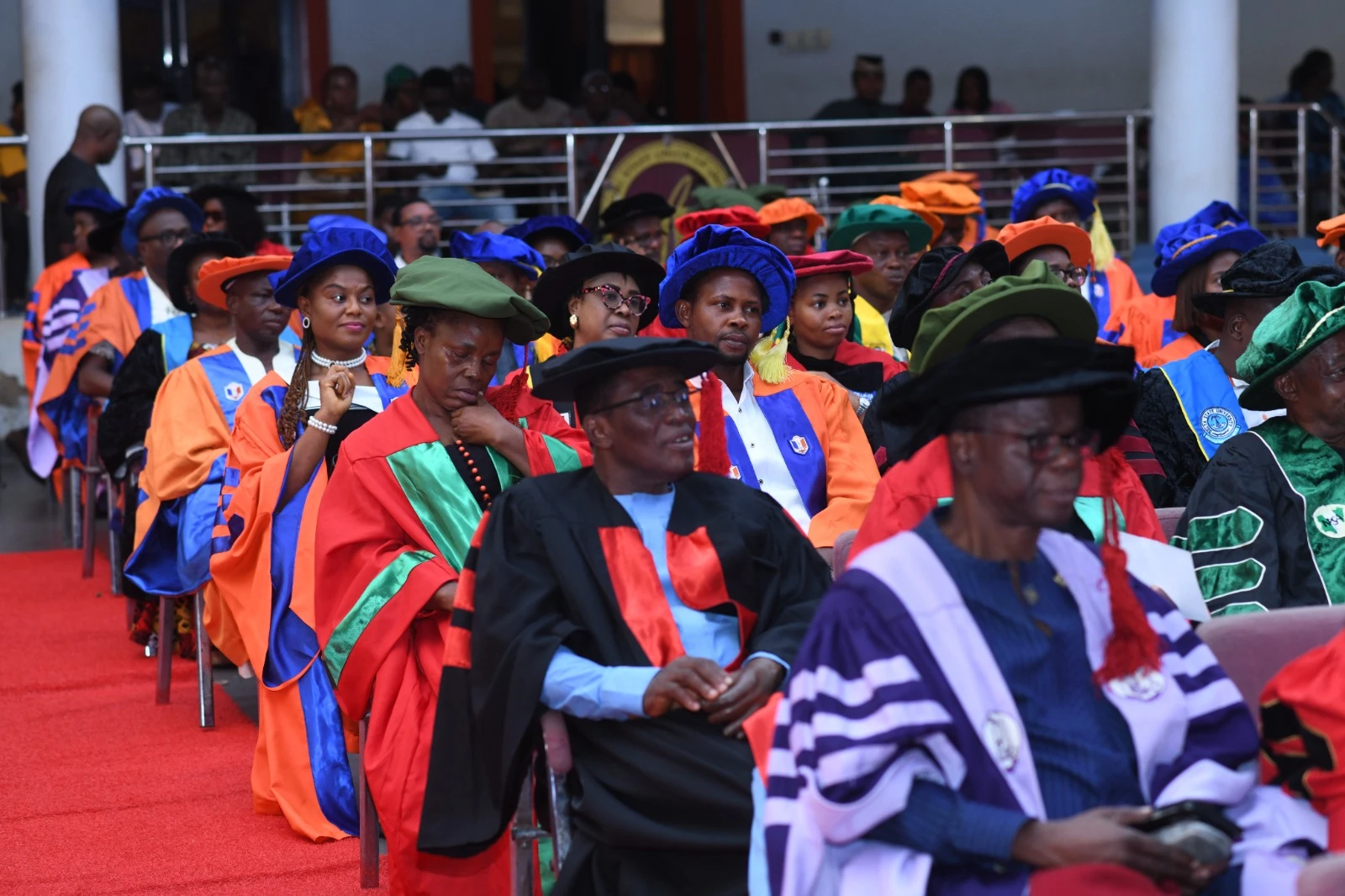
The lecture attracted members of the University community, including academic and non-teaching staff, as well as friends, colleagues and well-wishers of the inaugural lecturer from other universities, including Ebonyi State University (EBSU), Chukwuemeka Odumegwu Ojukwu University (COOU) and Enugu State University of Science and Technology (ESUT).
Three Emeritus Professors of Nnamdi Azikiwe University—Professors Anthony Eboatu, Rob Egwuatu and Ifedioranma Nwana—who had served the University as Deputy Vice-Chancellors at different times, were also present at the event.
← Back to News


