
Nnamdi Azikiwe University (UNIZIK), Awka, has reaffirmed its commitment to transforming postgraduate education through innovative teaching, quality supervision and...

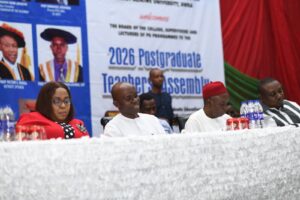
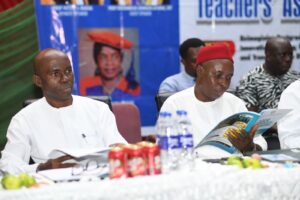








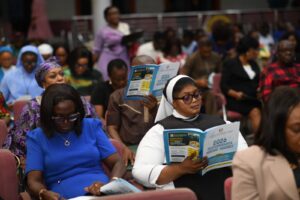 Nnamdi Azikiwe University (UNIZIK), Awka, has reaffirmed its commitment to transforming postgraduate education through innovative teaching, quality supervision and technology-driven learning as the College of Postgraduate Studies (CPGS) convened its 2026 Postgraduate Teachers' Assembly.
Held on Tuesday, July 28, 2026, at the ASUU Secretariat, the Assembly brought together postgraduate teachers, administrators and other stakeholders under the theme, "Reimagining Postgraduate Education: Innovative Teaching, Effective Supervision and Transformative Digital Learning." The event served as a strategic platform for evaluating current practices and charting a progressive path for postgraduate education in line with emerging global trends.
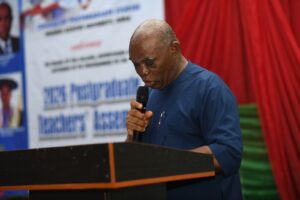
In his welcome address, the Provost of the College of Postgraduate Studies, Prof. Emmanuel O. C. Obidimma, described the Assembly as a critical forum for reviewing the College's achievements and setting a clear agenda for sustained academic excellence. He noted that the meeting, held in accordance with the Postgraduate Regulations and Guidelines, would examine the College's Annual Report and generate recommendations aimed at strengthening postgraduate education, research quality and institutional development.
Prof. Obidimma encouraged participants to engage actively in the deliberations, expressing confidence that the resolutions reached would further consolidate the College's reputation as a centre of excellence.
Declaring the Assembly open, the Vice-Chancellor, Prof. Ugochukwu Bond Stanley Anyaehie, commended the College for organising what he described as a timely and visionary initiative. He observed that the rapidly evolving global landscape, driven by artificial intelligence and technological advancement, requires universities to produce innovators, researchers and solution-driven graduates rather than merely awarding academic degrees.
The Vice-Chancellor identified three strategic priorities for repositioning postgraduate education at UNIZIK. On innovative teaching, he advocated a transition from conventional classroom methods to problem-based learning, interdisciplinary research and stronger collaboration with industry.
Addressing the issue of effective supervision, Prof. Anyaehie stressed that quality supervision remains the cornerstone of successful postgraduate training. He called for structured supervision timelines, periodic progress evaluations and timely feedback, while proposing the development of a UNIZIK Postgraduate Supervision Charter to clearly define the responsibilities and expectations of both supervisors and students.
On transformative digital learning, he encouraged the integration of modern digital technologies into postgraduate programmes and urged participants to develop a practical roadmap for implementing blended learning across the College. He assured members of the University's continued support through enhanced research funding, improved facilities and policies that reward academic excellence and innovation.
Delivering the keynote lecture titled "Overcoming Challenges and Maximising Value of Online Postgraduate Studies," the Chairman of the Committee of Provosts and Deans of Postgraduate Colleges and Schools in Nigeria and Professor at the Federal University of Lafia, Prof. Victor S. Dugga, described online postgraduate education as an irreversible global reality.
He attributed its increasing popularity to greater accessibility, flexibility, technological advancement, affordability and opportunities for international collaboration. According to him, successful online postgraduate education depends on sound institutional policies, relevant curricula, reliable digital infrastructure, appropriate technology and well-equipped academic staff.
Prof. Dugga highlighted flexibility, continuous learning reinforcement, time efficiency and practical knowledge application as major advantages of online learning. He also acknowledged challenges including poor motivation, technical limitations, domestic distractions and ineffective time management. To address these obstacles, he encouraged academics and students to embrace effective time management, maintain healthy work-life-study balance, build vibrant digital learning communities, organise efficient digital workspaces and cultivate self-discipline.
He further advocated the responsible use of artificial intelligence in postgraduate education, recommending platforms such as Khan Academy, OpenStax and MIT OpenCourseWare as valuable resources for enhancing learning outcomes. He concluded by urging scholars to continually acquire new digital competencies, noting that success in the AI era depends not only on intelligence but also on continuous learning, critical thinking and emotional intelligence.
Also presenting a paper titled "The Conundrum of Postgraduate Supervision, Thesis Writing and Completion Rates in Postgraduate Programmes," the Dean, School of Postgraduate Studies, Pamo University of Medical Sciences, Port Harcourt, Prof. Onyenmechi Johnson Afonne, emphasised that effective supervision remains fundamental to improving research quality and ensuring timely completion of postgraduate programmes.
He described postgraduate supervision as a professional responsibility that requires accountability to both students and the institution. Reviewing various supervision models, including the hands-on, hands-off and learning alliance approaches, he outlined the complementary responsibilities of supervisors and postgraduate students in fostering productive academic relationships.
Prof. Afonne encouraged supervisors to remain accessible, provide consistent guidance and create supportive environments that promote scholarly excellence, while urging students to demonstrate commitment, maintain regular communication with their supervisors and comply with institutional regulations.
He identified excessive workload, student diversity, inadequate preparation and emotional stress as some of the major challenges confronting postgraduate supervision. He advised supervisors to adopt student-centred approaches, embrace supervision as a collaborative learning process and avoid practices such as poor communication, dehumanising treatment and unnecessary hostility.
He further recommended that universities strengthen virtual learning infrastructure, institutionalise policies for online supervision and organise regular capacity-building programmes for supervisors and postgraduate students to improve research quality and completion rates.
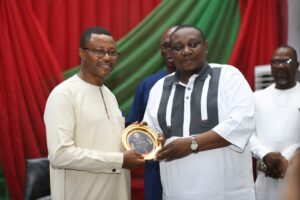
The highlight of the Assembly was the presentation of awards by the Vice-Chancellor, Prof. Ugochukwu Bond Stanley Anyaehie, to the guest speakers, Prof. Victor S. Dugga and Prof. Onyenmechi Johnson Afonne, in recognition of their outstanding contributions and insightful presentations.
Among dignitaries in attendance were the Deputy Vice-Chancellor(Academic), Prof. Alex Asigbo; the Registrar, Dr. Chineye Okeke, represented by Mrs. Dorothy Okeke, Deputy Registrar (Examinations); the Bursar, Mr. Gozie Chukwuma Egwuatu, represented by Mrs. Uju Okere, Deputy Bursar, College of Postgraduate Studies; the Director of the School of General Studies, Prof. Philomena Igbokwe; Deans of Faculties, Directors, Heads of Departments, Professors and postgraduate teachers.
← Back to News
Nnamdi Azikiwe University (UNIZIK), Awka, has reaffirmed its commitment to transforming postgraduate education through innovative teaching, quality supervision and technology-driven learning as the College of Postgraduate Studies (CPGS) convened its 2026 Postgraduate Teachers' Assembly.
Held on Tuesday, July 28, 2026, at the ASUU Secretariat, the Assembly brought together postgraduate teachers, administrators and other stakeholders under the theme, "Reimagining Postgraduate Education: Innovative Teaching, Effective Supervision and Transformative Digital Learning." The event served as a strategic platform for evaluating current practices and charting a progressive path for postgraduate education in line with emerging global trends.
In his welcome address, the Provost of the College of Postgraduate Studies, Prof. Emmanuel O. C. Obidimma, described the Assembly as a critical forum for reviewing the College's achievements and setting a clear agenda for sustained academic excellence. He noted that the meeting, held in accordance with the Postgraduate Regulations and Guidelines, would examine the College's Annual Report and generate recommendations aimed at strengthening postgraduate education, research quality and institutional development.
Prof. Obidimma encouraged participants to engage actively in the deliberations, expressing confidence that the resolutions reached would further consolidate the College's reputation as a centre of excellence.
Declaring the Assembly open, the Vice-Chancellor, Prof. Ugochukwu Bond Stanley Anyaehie, commended the College for organising what he described as a timely and visionary initiative. He observed that the rapidly evolving global landscape, driven by artificial intelligence and technological advancement, requires universities to produce innovators, researchers and solution-driven graduates rather than merely awarding academic degrees.
The Vice-Chancellor identified three strategic priorities for repositioning postgraduate education at UNIZIK. On innovative teaching, he advocated a transition from conventional classroom methods to problem-based learning, interdisciplinary research and stronger collaboration with industry.
Addressing the issue of effective supervision, Prof. Anyaehie stressed that quality supervision remains the cornerstone of successful postgraduate training. He called for structured supervision timelines, periodic progress evaluations and timely feedback, while proposing the development of a UNIZIK Postgraduate Supervision Charter to clearly define the responsibilities and expectations of both supervisors and students.
On transformative digital learning, he encouraged the integration of modern digital technologies into postgraduate programmes and urged participants to develop a practical roadmap for implementing blended learning across the College. He assured members of the University's continued support through enhanced research funding, improved facilities and policies that reward academic excellence and innovation.
Delivering the keynote lecture titled "Overcoming Challenges and Maximising Value of Online Postgraduate Studies," the Chairman of the Committee of Provosts and Deans of Postgraduate Colleges and Schools in Nigeria and Professor at the Federal University of Lafia, Prof. Victor S. Dugga, described online postgraduate education as an irreversible global reality.
He attributed its increasing popularity to greater accessibility, flexibility, technological advancement, affordability and opportunities for international collaboration. According to him, successful online postgraduate education depends on sound institutional policies, relevant curricula, reliable digital infrastructure, appropriate technology and well-equipped academic staff.
Prof. Dugga highlighted flexibility, continuous learning reinforcement, time efficiency and practical knowledge application as major advantages of online learning. He also acknowledged challenges including poor motivation, technical limitations, domestic distractions and ineffective time management. To address these obstacles, he encouraged academics and students to embrace effective time management, maintain healthy work-life-study balance, build vibrant digital learning communities, organise efficient digital workspaces and cultivate self-discipline.
He further advocated the responsible use of artificial intelligence in postgraduate education, recommending platforms such as Khan Academy, OpenStax and MIT OpenCourseWare as valuable resources for enhancing learning outcomes. He concluded by urging scholars to continually acquire new digital competencies, noting that success in the AI era depends not only on intelligence but also on continuous learning, critical thinking and emotional intelligence.
Also presenting a paper titled "The Conundrum of Postgraduate Supervision, Thesis Writing and Completion Rates in Postgraduate Programmes," the Dean, School of Postgraduate Studies, Pamo University of Medical Sciences, Port Harcourt, Prof. Onyenmechi Johnson Afonne, emphasised that effective supervision remains fundamental to improving research quality and ensuring timely completion of postgraduate programmes.
He described postgraduate supervision as a professional responsibility that requires accountability to both students and the institution. Reviewing various supervision models, including the hands-on, hands-off and learning alliance approaches, he outlined the complementary responsibilities of supervisors and postgraduate students in fostering productive academic relationships.
Prof. Afonne encouraged supervisors to remain accessible, provide consistent guidance and create supportive environments that promote scholarly excellence, while urging students to demonstrate commitment, maintain regular communication with their supervisors and comply with institutional regulations.
He identified excessive workload, student diversity, inadequate preparation and emotional stress as some of the major challenges confronting postgraduate supervision. He advised supervisors to adopt student-centred approaches, embrace supervision as a collaborative learning process and avoid practices such as poor communication, dehumanising treatment and unnecessary hostility.
He further recommended that universities strengthen virtual learning infrastructure, institutionalise policies for online supervision and organise regular capacity-building programmes for supervisors and postgraduate students to improve research quality and completion rates.
The highlight of the Assembly was the presentation of awards by the Vice-Chancellor, Prof. Ugochukwu Bond Stanley Anyaehie, to the guest speakers, Prof. Victor S. Dugga and Prof. Onyenmechi Johnson Afonne, in recognition of their outstanding contributions and insightful presentations.
Among dignitaries in attendance were the Deputy Vice-Chancellor(Academic), Prof. Alex Asigbo; the Registrar, Dr. Chineye Okeke, represented by Mrs. Dorothy Okeke, Deputy Registrar (Examinations); the Bursar, Mr. Gozie Chukwuma Egwuatu, represented by Mrs. Uju Okere, Deputy Bursar, College of Postgraduate Studies; the Director of the School of General Studies, Prof. Philomena Igbokwe; Deans of Faculties, Directors, Heads of Departments, Professors and postgraduate teachers.
← Back to News


