
UNIZIK DRIVING INNOVATIONS FOR PRACTICAL PROBLEM SOLVING
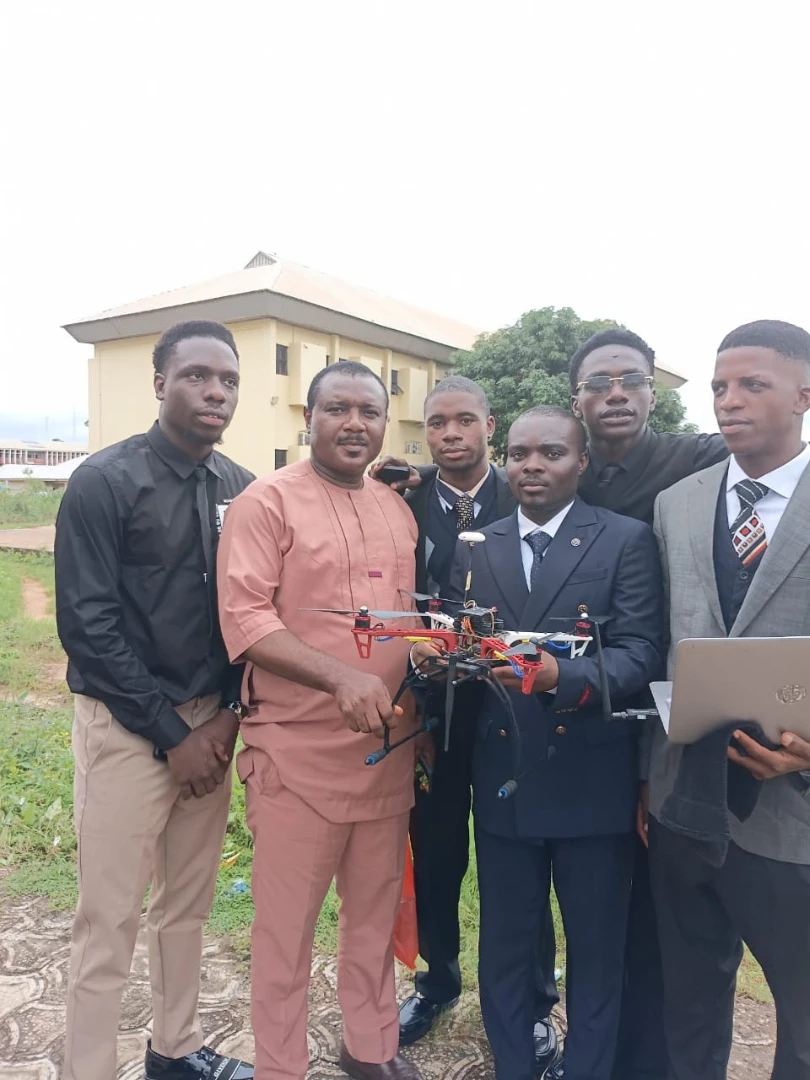
UNIZIK Mechanical Engineering Students Build Drone To Monitor Pipeline Vandalism as Final Year Project
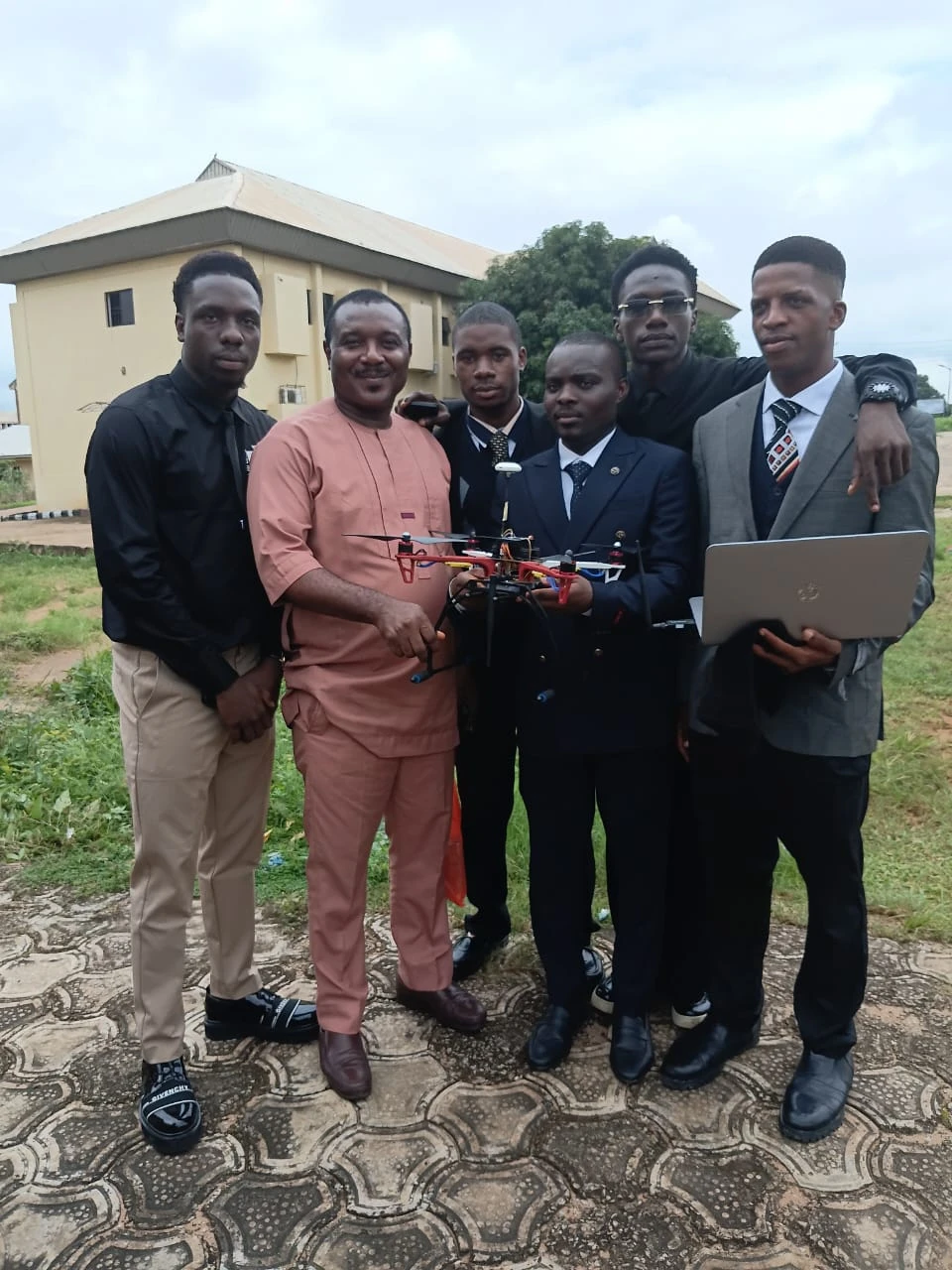
Five final year students of the Department of Mechanical Engineering, Nnamdi Azikiwe University have demonstrated exceptional output of their training having successfully designed, fabricated and demonstrated an Unmanned Aerial Vehicle (UAV) Quadcopter for monitoring pipeline vandalisation during their project defense titled, "Design and Fabrication of a Quadcopter for Monitoring Pipeline Vandalisation".
Final-year projects in UNIZIK's Mechanical Engineering Department are engineered to transform students into industry-ready problem solvers rather than evaluating passive inputs, projects measure demonstrated competence in tackling contemporary engineering challenges with students synthesizing theory with practice by fabricating functional prototypes tailored to local needs.
The innovation by the quintet of Chinyeaka Kizito Udensi, Otito Stephen Chukwuma, Peter Ugochukwu Anigbogu, Chigozie Emmanuel Nwabunwanne and Frank-Anthony Chukwuebuka Nwegwu was supervised by the Dean of the Faculty of Engineering, Engr. Prof. Ugochukwu Chuka Okonkwo.
Presenting their work, the students said the project involved aerodynamic, performance and structural analyses to determine appropriate design parameters and component selection. They disclosed that the quadcopter frame and component layout were modeled using SolidWorks, while a Pixhawk flight controller was configured using Mission Planner to support autonomous navigation and communication with a Ground Control Station.
According to them, the developed UAV integrates an FPV camera for real-time visual surveillance, GPS and telemetry modules for positioning and communication, and gas and temperature sensors for detecting abnormal environmental conditions around pipelines.
They further revealed that the estimated flight endurance is approximately 20 minutes. Structural analysis produced a maximum bending stress of 2.93 MPa with a factor of safety of 2.45, while SolidWorks simulation confirmed that the maximum stress remained below the material yield strength.
In his reaction, the Head of the Department of Mechanical Engineering at UNIZIK and Professor of Design and Materials Technology, Engr. Prof. Christian Emeka Okafor, described the inventions as a "class act of contribution to Engineering, Technology, and Science," achieved through dedicated teaching, research, and student mentorship.
Prof. Okafor said the Department is keying into experiential learning in its quest to produce graduates who will be future entrepreneurs and problem solvers to societal challenges, while also putting the Department and the University on the map.
The scholar also disclosed that other unique projects were defended in the session. These include the 'Design and Construction of a Modular Fluid Mechanics Test Rig for Flow Analysis' supervised by Engr. Dr. Onyemazuruwa Azaka and produced by Kamsi Johnbosco Ekeanyanwu, Emmanuel Chinonso Anago, Peter Ogbo and Peace Ufuomaogene Ayovvunefe.
Another is the 'Design and Fabrication of a Sustainable Mechanical Machine for the Production of Non-Woven Textile Fabric from Recycled Plastic Waste' supervised by Engr. Prof. Solomon Nwigbo and Engr. C.C. Okunna, and produced by Austin Onyedikachukwu Madu, Chinecherem Anthony Anointed, Daniel Ebubechukwu Chibueze and Chimezie Nweke.
Also, 'Production of Composite Interlocks utilizing Plastic as a Base Material' supervised by Engr. Prof. Chinonso Achebe and produced by Valentine Chidera Udeozor, Gloria Oluebubechukwu Onuegbu, Gabriel Chigozie Ogbonna, Uzochukwu Vincent Ugochukwu and Clinton Chibuzor Anyaka.
The students were examined by the External Examiner from the Federal University of Petroleum Resources, (FUPRE), Effurun, Engr. Prof. Emagbetere Eyere, who commended the students for the technical depth and practical relevance of their work.
The project defense attracted lecturers, technologists, students and industry stakeholders who commended the Department for its drive toward practical, solution-based Engineering.
This innovation highlights the practical problem-solving capabilities within Nigerian tertiary institutions. The breakthrough project underscores UNIZIK’s commitment to applied research under the leadership of the Vice Chancellor, Prof. Ugochukwu Bond Stanley Anyaehie demonstrating how Nigerian tertiary institutions can drive technological self-reliance to address societal challenges.
← Back to News


